
Application Notes: Heavy Equipment Relays & Switches
Application Notes: Heavy Equipment
Heavy equipment relies on electrical control systems to operate engines, hydraulic functions, lighting, safety features, and auxiliary machinery. Relays and switches play an important role in managing these systems, allowing operators to control equipment functions and electrical loads efficiently.
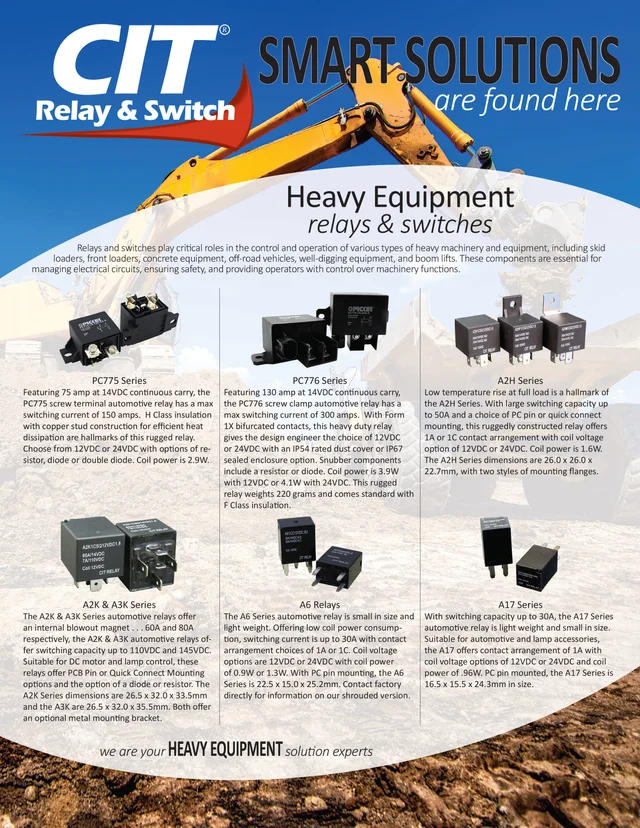
CIT Relay & Switch offers a range of electromechanical relays and switches for heavy equipment applications, including skid loaders, front loaders, concrete equipment, off-road vehicles, well-digging equipment, and boom lifts. Available configurations include different switching capacities, contact arrangements, mounting options, and sealing features to support a variety of equipment designs. Whether used for engine starting, hydraulic control, lighting, or operator interfaces, selecting the right relay or switch helps engineers meet the electrical and operational requirements of heavy machinery.
|| Products for Heavy Equipment Applications ||
Recommended Relays for Heavy Equipment Applications
-

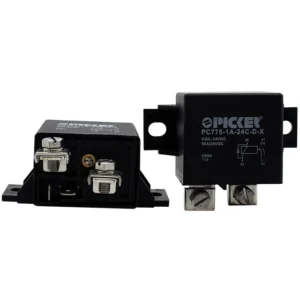
PC775 75 Amp Screw Terminal Automotive Relay
-
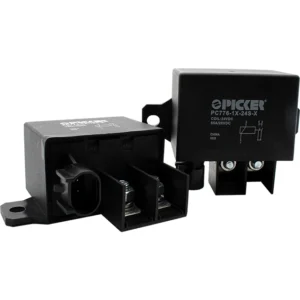
PC776 130 Amp Screw Terminal Automotive Relay
-
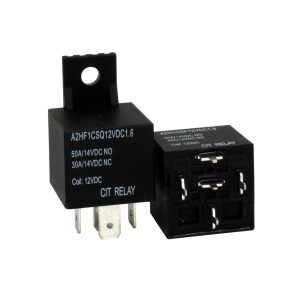
A2H 50 Amp Large capacity and Low temperature Automotive Plug-In / PCB Relay
-
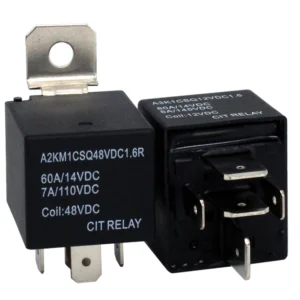
A2K 60 Amp High DC Load blowout Magnet Automotive Plug-In / PCB Relay
-
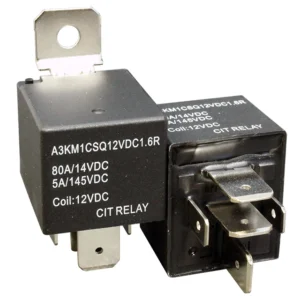
A3K 80 Amp High DC Load blowout Magnet Automotive Plug-In / PCB Relay
-
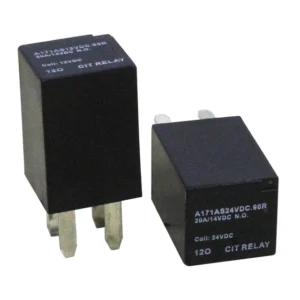
A6 35 Amp Automotive Plug-In Relay
-
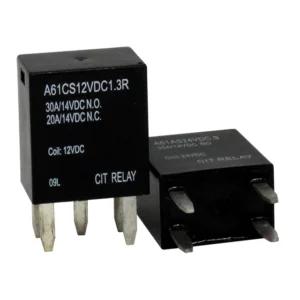
A17 30 Amp Automotive Plug-In Relay
-
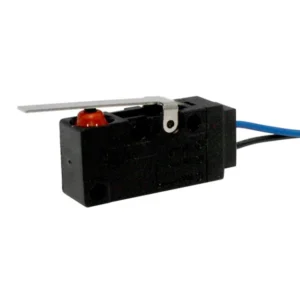
VM3S Series Sealed Miniature Snap Action Switch
Recommended Switches for Heavy Equipment Applications
-
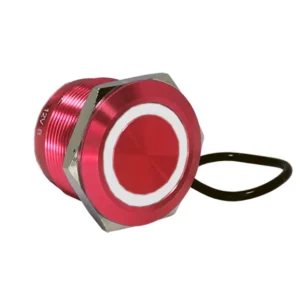
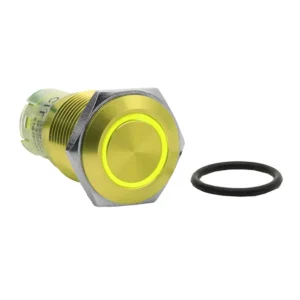
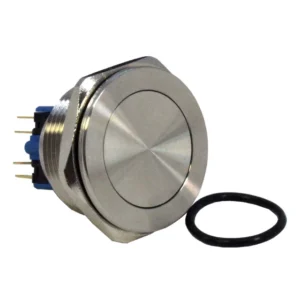
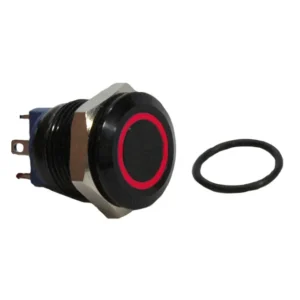
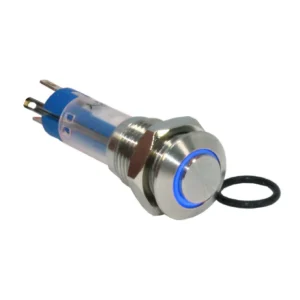
AH Series Illuminated Anti-Vandal Push Button Switch
-
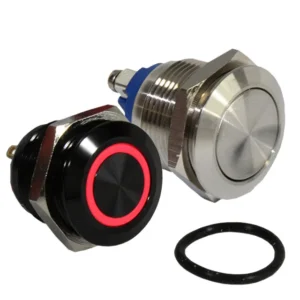
BH Series Illuminated Anti-Vandal Push Button 16mm & 19mm Switch
-
CH Series Illuminated Anti-Vandal Push Button 16mm Switch
-
DH Series Illuminated Anti-Vandal Push Button Switch
-
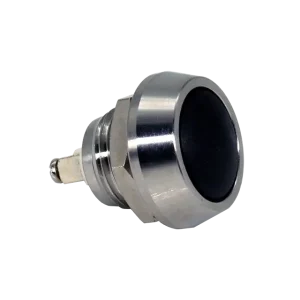
EH Series Illuminated Anti-Vandal 12mm Switch
-
FH Series Illuminated Anti-Vandal Push Button 12mm Switch
-
GH Series Illuminated Anti-Vandal Push Button 10mm Switch
Common Applications for Heavy Equipment Relays & Switches
Relays and switches are used throughout heavy machinery to manage electrical power, control equipment functions, and provide operator input.
Common applications include:
- Skid Loaders and Front Loaders: Control hydraulic pumps, valves, engine starting systems, work lights, and auxiliary attachments.
- Concrete Equipment: Manage electrical circuits for concrete mixers, pumps, power systems, and auxiliary equipment.
- Off-Road Vehicles: Support engine control, lighting, power distribution, and operator control functions.
- Well-Digging Equipment: Control drilling systems, hydraulic functions, auxiliary power, and equipment monitoring.
- Boom Lifts: Support lifting and lowering controls, operator interfaces, safety systems, and power management.
- Construction Machinery: Provide electrical switching and control for engines, motors, hydraulic systems, and equipment accessories.
Selecting the Right Relays and Switches for Heavy Equipment
Heavy equipment operates under different electrical, mechanical, and environmental conditions. Selecting the right component requires evaluating the application’s specific requirements.
Important considerations include:

Current and Voltage Ratings
Match the relay or switch ratings to the electrical load and operating voltage.

Switching Requirements
Consider continuous current, maximum switching current, DC switching conditions, and the type of electrical load.

Coil Voltage and Power
For relays, verify coil voltage and power requirements against the equipment’s control circuit.

Contact Configuration
Select the appropriate contact arrangement based on the required circuit operation.

Mounting and Connections
Evaluate screw terminals, PCB pins, quick-connect terminals, and other available mounting options.

Environmental Protection
Consider exposure to dust, moisture, vibration, temperature changes, and other operating conditions.

Mechanical Requirements
Review component dimensions, mounting constraints, and expected operating cycles.
CIT Relay & Switch offers different relay and switch configurations to help engineers address these requirements. Always review individual product datasheets to confirm suitability for the intended application.
Need Help Selecting the Right Relay or Switch for Heavy Equipment?
Selecting the right components for heavy machinery requires careful consideration of electrical loads, switching requirements, mounting configurations, and operating conditions. CIT Relay & Switch offers a range of relay and switch solutions for heavy equipment applications.
Frequently Asked Questions
What types of heavy equipment use relays and switches?
Relays and switches are used in skid loaders, front loaders, concrete equipment, off-road vehicles, well-digging equipment, boom lifts, and other construction and industrial machinery.
What are relays used for in heavy equipment?
Relays are commonly used for engine starting, hydraulic system control, lighting circuits, power distribution, auxiliary equipment, and other electrical switching applications.
What types of switches are used in heavy machinery?
Heavy machinery can use push button switches, anti-vandal switches, snap-action switches, and other switch configurations for operator controls, equipment interfaces, and auxiliary functions.
How do relays control hydraulic systems in heavy equipment?
Relays can switch electrical circuits that operate hydraulic pumps and valves. These circuits help control functions such as lifting, lowering, tilting, and operating attachments.
What should I consider when selecting a relay for heavy equipment?
Consider operating voltage, current requirements, switching capacity, coil specifications, contact arrangement, mounting configuration, and environmental operating conditions.
Why are high-current relays important in heavy equipment?
High-current relays allow control circuits to switch electrical loads that require higher current capacity. They are useful in applications such as power distribution, motor control, and other equipment electrical systems.