
Relays & Switches for Food & Beverage Systems


Application Notes: Food & Beverage
Switches and relays are vital components in food and beverage equipment, supporting safe, efficient, and automated operation. They help control machinery, regulate temperature, manage fluid flow, and support equipment safety. CIT Relay & Switch products are used in applications such as lighting controls, water heaters, dishwashers, thermostats, beverage dispensers, exhaust hoods, commercial grills, refrigeration equipment, ranges, ovens, and HVAC systems. These components help automate operations, improve efficiency, and maintain consistent performance across food and beverage applications.
Recommended Relays for Food & Beverage Applications


Recommended Switches for Food & Beverage Applications
-

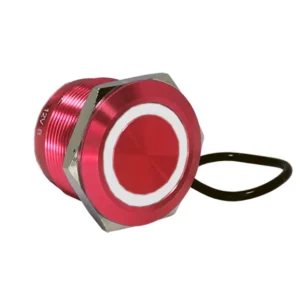
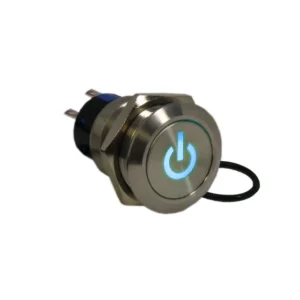
AH Series Illuminated Anti-Vandal Push Button Switch
-
AHU Series Illuminated Anti-Vandal Push Button 19mm Switch
-
BH Series Illuminated Anti-Vandal Push Button 16mm & 19mm Switch
-
CH Series Illuminated Anti-Vandal Push Button 16mm Switch
-
DH Series Illuminated Anti-Vandal Push Button Switch
-
DH40 Series Illuminated Anti-Vandal Push Button 40mm Switch
-
FH Series Illuminated Anti-Vandal Push Button 12mm Switch
-
GH Series Illuminated Anti-Vandal Push Button 10mm Switch
-
DM3 Series Ultra Sub-Miniature Snap Action Switch
-
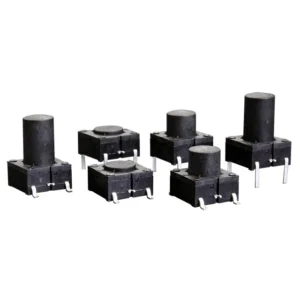
ME Series Process Sealed Tactile Switch
-
SM3 Series Sub Miniature Snap Action Switch
-
STJ Series Multi-Directional Actuator Sealed Tactile Switch
-
STJV Series Right Angle Multi-Directional Actuator Sealed Tactile Switch
-
STK Series Sealed Radial Tactile Switch
-
STR Series Surface Mount Sealed Tactile Switch
-
STS Series Surface Mount Sealed Tactile Switch
-
TJ Series Sealed Illuminated Tactile Switch
-
VM3 Series Miniature Snap Action Switch
-
VM3S Series Sealed Miniature Snap Action Switch




Common Food & Beverage Equipment Applications
Food and beverage equipment uses electrical switching and control in a wide range of appliances and commercial systems. Relays and switches can support functions such as power control, operator input, temperature-related control circuits, and equipment operation.
Common application areas include:
- Dishwashers: Electrical control functions in commercial and household dishwashing equipment.
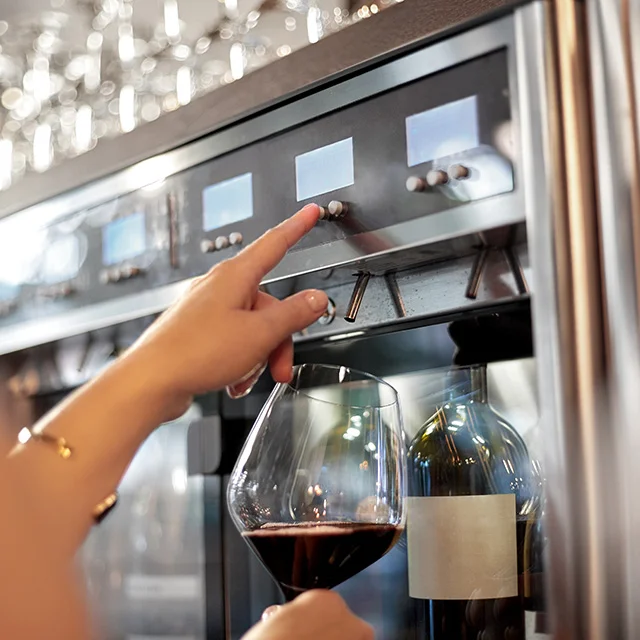
- Beverage Dispensers: Switching and control functions in beverage dispensing systems.
- Refrigeration Equipment: Electrical switching in refrigeration units and related equipment.
- Commercial Grills, Ranges & Ovens: Control circuits and operator interfaces in cooking equipment.
- Water Heaters: Electrical switching and control functions in water-heating equipment.
- Exhaust Hoods: Switching and operator controls for ventilation equipment.
- Lighting Controls: Switching functions for equipment and work-area lighting.
- HVAC Systems: Electrical control functions in heating, ventilation, and air-conditioning equipment.
Relay & Switch Applications in Food & Beverage Equipment
Equipment Power & Electrical Control
Temperature-Related Control Systems
Fluid & Beverage Dispensing Systems
Operator Interfaces & Push Button Controls
Illuminated push buttons and tactile switches can provide user input for equipment functions. Switch selection depends on factors such as panel design, actuator style, mounting dimensions, and the expected frequency of operation.